

Knowledge Built Across Four Decades

My work combines scientific research, environmental management, strategic planning, monitoring, and evaluation to support sustainable freshwater outcomes.

Aquatic Ecology

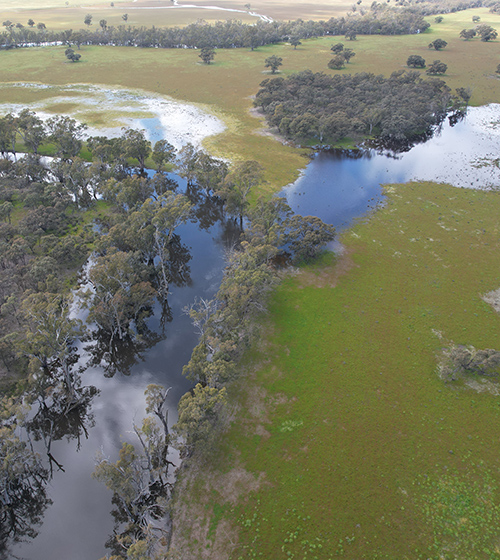
With over 40 years of experience in aquatic ecology research and practice, I continue to contribute to scientific literature while applying ecological knowledge to real-world management challenges.

As a ecological generalist, I specialise in connecting information from multiple ecosystem components to develop a coherent understanding of ecological systems, restoration opportunities, and environmental responses.
Ecosystem assessment
Freshwater ecology
Ecological restoration
Environmental water management
Scientific synthesis and review
Learn More

Monitoring Design & Review

Monitoring programs provide the evidence needed to support effective management.

I have contributed to several major monitoring initiatives, including the Sustainable Rivers Audit, The Living Murray Program, and Commonwealth Environmental Water Holder intervention monitoring programs. Most recently I have written a chapter about the design of condition monitoring programs
Monitoring framework design
Program review and optimisation
Risk-based monitoring approaches
Condition monitoring strategies
Data interpretation and reporting
Learn More

Evaluation

Environmental evaluation is increasingly important for demonstrating outcomes, accountability, and learning.

Evaluating environmental programs requires consideration of scale, uncertainty, system variability, and multiple interacting influences.
Program evaluation
Outcome assessment
Evidence review
Adaptive management evaluation
Strategic performance assessment
Learn More

Management & Restoration Planning

Monitoring programs provide the evidence needed to support effective management.

I have contributed to several major monitoring initiatives, including the Sustainable Rivers Audit, The Living Murray Program, and Commonwealth Environmental Water Holder intervention monitoring programs.
Environmental flow planning
Restoration planning
Strategic management plans
Scenario assessment
Risk and uncertainty analysis
Learn More

Frequently asked questions

Find quick answers to common questions below. Need more help? Contact us anytime for further assistance!
What does a typical engagement look like?
Normal purchasing procedures where my role may be to coordinate or joing a team.
Start with a free call where we can discuss what the client needs and their expectations.
Follow up with development of a proposal and subsequent contract.
proposal will include project management arrangements which will include regular meetings to discuss progress and any changes to risks. Meetings also provide client to assess progress and raise issues around alignment with their needs.
Project completed with delivery of agreed output, which will often include a written output and an opportunity to discuss outputs with client and stakeholders.
What is the origin of the name Gyre and Gimble?
The words Gyre and Gimble come from the poem Jabberwocky by Lewis Carol included in his book, Alice through the looking glass. Jabberwocky is considered one of the best nonsense poems in English. I decided to name my consulting practice Gyre and Gimble for several reasons. The name sounds like the name of an old business. The words are reminiscent of cavorting or gambolling which speak to the joyous pursuit of knowledge. Finally, there are many words that are defined by their user and using nonsense words gives people the license to define Gyre and Gimble to best suit their needs.
How are differences resolved?
Part of our commitment to excellent communication and co-design is regular meetings that provide an opportunity for feedback on progress. Our response to feedback will be to identify solutions that will realign the project with client needs, adapt project scope or revise work undertaken
In what ways do you collaborate?
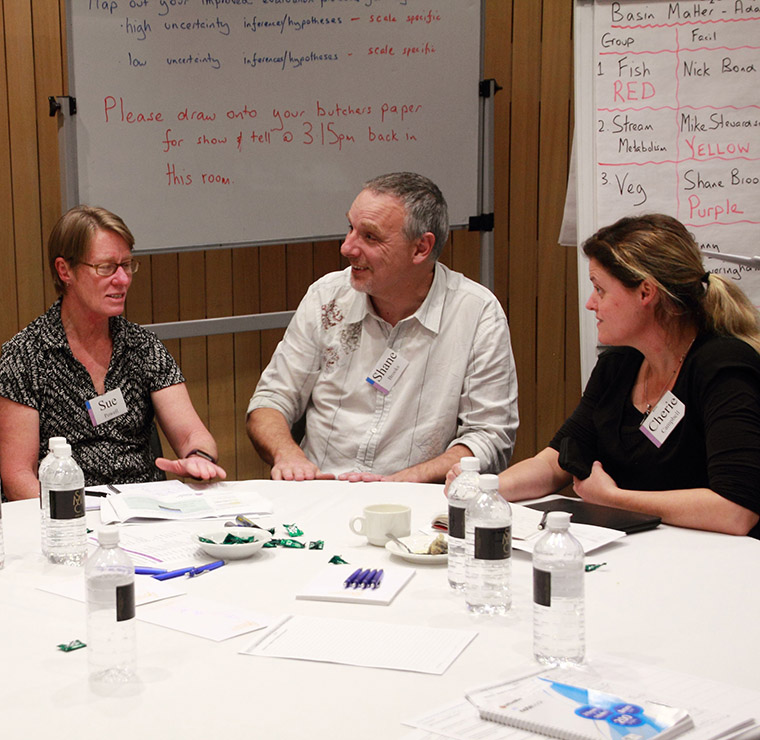
I have filled a variety of collaborative roles including, leading, managing, undertaking, advising and reviewing. While there are advantages in assembling a collaborative team at the start of a project, this is not always possible. M and my experience y experience enables me to join teams during a project and fulfill my allotted role in a constructive manner.

Understanding roles and responsibilities is critical to effective collaboration and further it is important that I understand how my role relates to my collaborators roles and from that, ways in which I can fulfill my role, while facilitating delivery by both collaborators and the team.
How are fees structured?
Fees are structured around the time that I and my team expect to spend undertaking the project. Costs associated with field trips, experimental development or analysis are charged at cost or tax office rates.
How do we know if the project is a good fit?
The initial contact is an important step in determining if Gyre and Gimble Consulting can meet a client's needs. My career has given me ample opportunities to understand the risks associated with over promising or over-reaching my technical capacity. I believe collaboration provides a better path to quality advice and if the scope includes areas where my technical competence is limited I would seek to collaborate both for the sake of the client and also for my own experience.

Looking for independent ecological advice or strategic environmental support?

Elevate your success with cutting-edge solutions—partner with us to unlock growth, efficiency, and unbeatable results.