Case Studies
12 min read
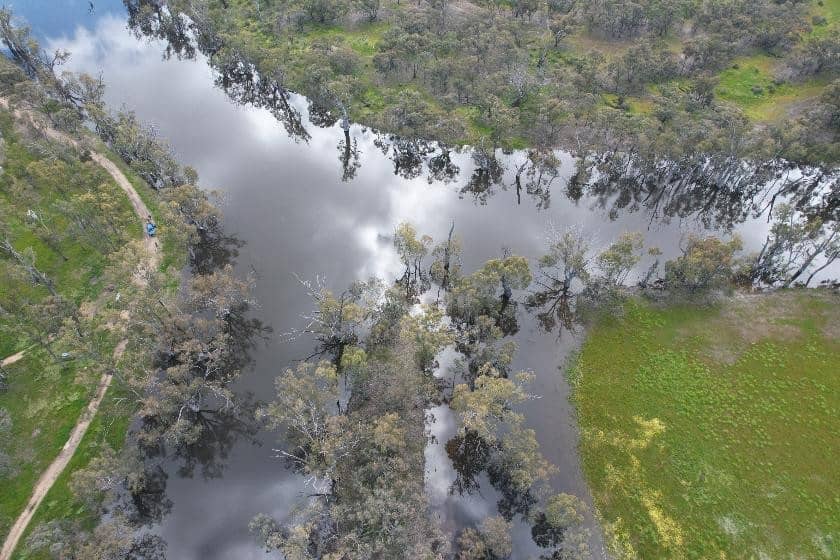
Healthy floodplains and wetlands rely on well-managed environmental water to sustain biodiversity, ecosystem function, and long-term resilience. This project explored how existing and upgraded irrigation infrastructure could be leveraged to improve the delivery of environmental water across the Edward–Wakool River system and its associated wetlands and floodplains.
By adopting a landscape-scale approach, the project sought to maximise environmental outcomes while supporting the broader objectives of the Murray–Darling Basin Plan.
Delivering environmental water to large, interconnected floodplain systems is often constrained by infrastructure, accessibility, and the complexity of managing water across multiple landscapes and stakeholders. Many ecologically significant wetlands and floodplain habitats are difficult to reach using traditional environmental flow methods.
The challenge was to identify opportunities to use existing water delivery infrastructure more efficiently, enabling flexible and targeted environmental watering that would enhance ecological outcomes across the region.
The project investigated the potential for Murray Irrigation Limited’s (MIL) existing and upgraded channel network to support environmental water delivery beyond its traditional irrigation role.
The assessment focused on:
The project considered how infrastructure could enable a coordinated, landscape-scale approach to environmental watering rather than managing individual sites in isolation.
The assessment identified significant opportunities to improve environmental water delivery by making better use of existing irrigation infrastructure.
Key findings included:
The project demonstrated how irrigation infrastructure can play a broader role in environmental restoration by supporting more strategic and efficient water delivery across interconnected ecosystems.
The findings provide a foundation for future collaborative water management initiatives, helping optimise environmental watering while advancing the long-term objectives of the Murray–Darling Basin Plan and improving the health of floodplain and wetland ecosystems.
This project contributes to more sustainable water management by: